Search this Site:

Reporting and Outcomes

We ask all our grantees to report on the impact of their projects and what they have learnt. This learning should benefit grantees and allows us to make informed decisions about how to support our community.

What is expected of me?

In most cases, we expect grantees to report on both the outputs and outcomes of their projects.

Outputs are the things that your organisation did with the funding you received (such as running some workshops). Outcomes are the changes observed in people, places, organisations and systems that result from these outputs (such as a reduction in loneliness or an improvement in skills). Impact is the longer-term and broader change resulting from those outcomes (such as a more resilient community).

There are many ways that you can measure outputs and outcomes. Below you will find further guidance on choosing the best approach. We also offer a database containing examples of measures that grantees might wish to consider.

Most impact measurements require you to collect data from your beneficiaries. When using these measures, we expect you to collect data from most (if not all) of your beneficiaries.

We also suggest that you consider using case studies to add detail and context to your data-based measures. A case study is detailed description of a person or organisation who benefitted from your work, used to illustrate the change you made.


How much reporting is needed?

The number of measures that we expect grant recipients to report on will generally depend on the amount of funding they receive:

  • Small grants (up to £5,000): You should provide evidence, normally in the form of data, of the outputs you achieved, including the number of people who benefitted and their demographic data if possible. We would also like to know about your outcomes, even if it’s just one or two key pieces of evidence.
  • Larger grants (totalling over £5,000): You should send us data evidencing your outputs, including a breakdown of the people who benefitted – their age, gender, ethnicity etc. You should also tell us about the outcomes you achieved, normally through a range of measures, especially for the largest grants (over £20,000). Where possible, you should include case studies.


What should I report on?

Both outputs and outcomes should be agreed with our Grants Team during your application process. We expect all grant recipients to present a clear picture of the outputs that they produced using our funding, including the number of people who benefitted. This might also include other data on outputs, such as events held. If your project involved building work, we would expect to receive evidence that the work was done. Photographs that illustrate your outputs are always welcome.

There are no fixed rules about what outcomes should be reported – it depends on the nature of the project and here are some tips:
  • Think about the change you are trying to make. What difference did your project aim to create in people’s lives or in your community? For example, were you trying to improve wellbeing, or strengthen community connections?
  • Think about what you want to learn. The best impact reporting will help you to learn about the effectiveness of your own work. What insights would help you improve or adapt your work in the future?
  • Figure out how those changes can be measured and reported on. Simple methods like short surveys, feedback forms, or interviews can produce useful data, especially for smaller projects. More sophisticated measures, such as Outcome Stars, and mental wellbeing surveys, are also available. These methods often provide more informative data, and they don’t always involve much more effort. We will provide a database of outputs and outcomes (coming soon) to help you to learn what’s available.
  • More is not always better! Focus on the things that illustrate your project’s impact the best. We much prefer a small number of accurate, well-chosen pieces of evidence.
  • What are you already recording? You may already collect useful information for your own purposes (e.g. attendance lists, feedback quotes). Could that help show the impact of your work?
  • Use stories and quotes. Personal stories or direct quotes from people who benefitted from your project can be powerful ways to show impact.
  • Be honest and realistic. Not everything goes to plan, and that’s okay. We value learning about what doesn’t work just as much as what does, especially where you are trying something new. We want to know what you might do differently next time.

FUNDING FOCUS AREAS

STRONGER COMMUNITIES

This funding area aims to create strong, resilient communities. It is one of the Harpur Trust’s two priority funding areas.

GOALS

Projects in this area might have goals like:

  • Increasing the community’s capacity to come together and solve problems
  • Improving people’s sense of connection with their community
  • Helping people to feel engaged or empowered to create change in their communities
  • Creating a feeling of cohesion or “oneness” in our diverse communities
  • Helping people from more marginalised areas of society to feel that they belong

TYPES OF PROJECT

Many of the Stronger Communities projects that we have funded in the past fall into one of the following types:

  • Cultural and recreational projects, such as events that celebrate culture and community
  • Projects in which community buildings are built or improved
  • Projects which aim to increase the amount of volunteering in the community
  • Projects that focus on making marginalised people feel more included

EXAMPLE OF OUTPUTS AND OUTCOMES 

The Harpur Trust previously funded befriending services, where community members visit marginalised individuals to make friends and reduce loneliness. One output of this type of project is the number of befriending visits carried out during the project. One outcome might be a reduction in loneliness felt by the people receiving those visits.

POVERTY AND DISADVANTAGE

This funding area aims to reduce hardship and remove disadvantages faced by people experiencing poverty. It is one of the Harpur Trust’s two priority funding areas. More detail will be added here in due course.


Discover More


Our History

SIR WILLIAM HARPUR’S VISION

The Harpur Trust was founded over 450 years ago by Sir William Harpur, a local man born to humble beginnings who made his fortune as a merchant tailor and who became Lord Mayor of London in 1561.

Today our activities are still inspired by Sir William Harpur’s vision. He understood the value of education, and he saw the real needs to be addressed a month the disadvantaged, poor and sick in his home town of Bedford.


Find Out More

Featured News

16 Dec 2025

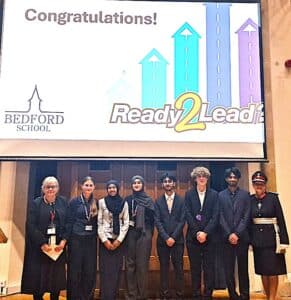
Year 12 Students Impress with Innovative Community Projects at Borough Leadership Event

25 Nov 2025

Azalea: A Grant Impact Story

20 Oct 2025

Sixth formers in Bedford are Ready 2 Lead